Prompted by ELX is our bi-weekly industry-wide briefing on the AI developments that matter to the business of events. We cut through product announcements and rumour to explain what has genuinely changed in the artificial intelligence landscape, and what it really means for event leaders and their teams.
New business profiles, brand research and an attribution framework bring AI-mediated discovery into sharper focus. Event leaders should examine what prospective audiences learn before they reach an event website, and how that influence is measured.
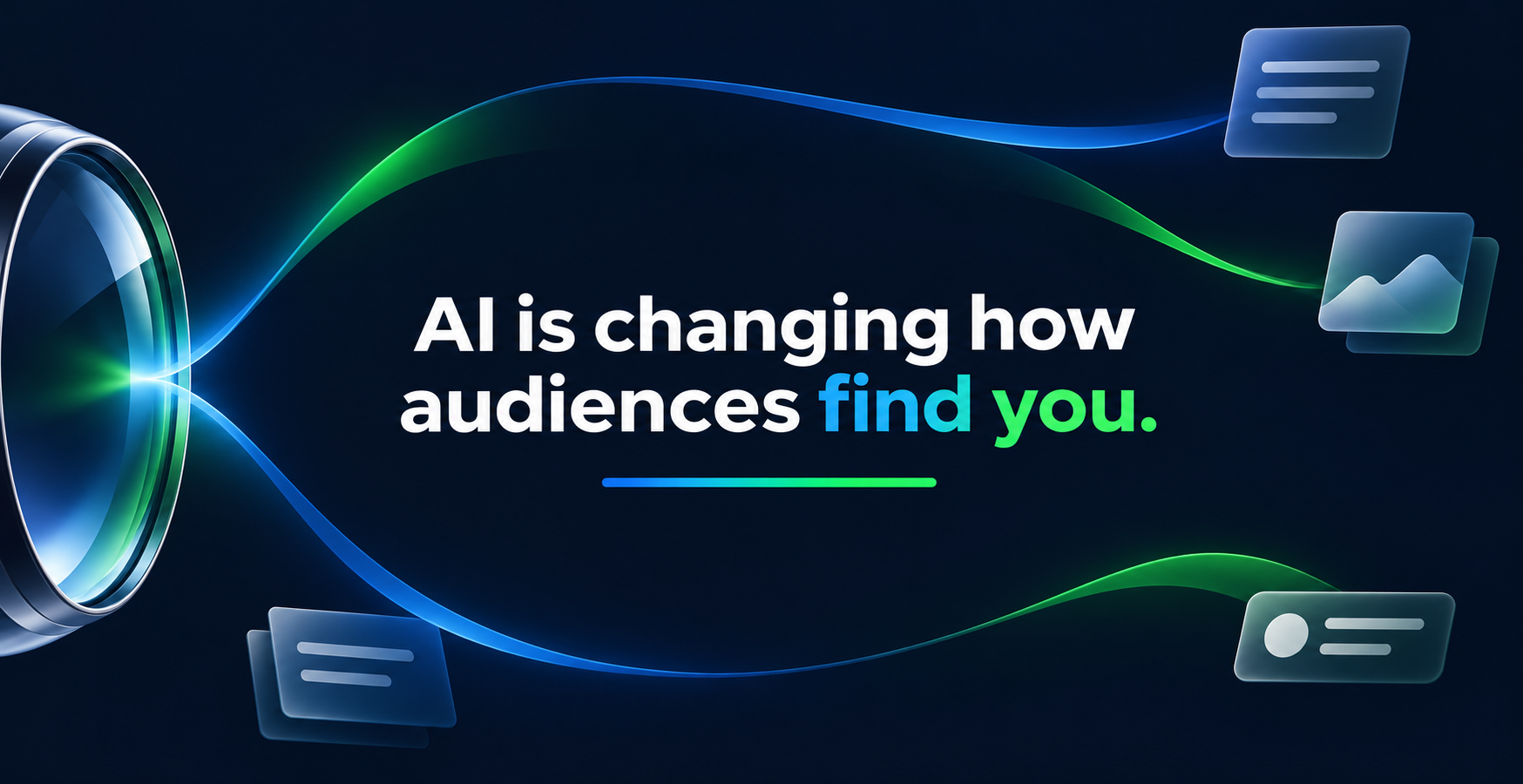
The most useful shift in this reporting period concerns the audience journey. AI platforms are developing ways for businesses to manage their presence, while marketers and measurement bodies are confronting the gaps between being mentioned, influencing a decision and proving a business outcome.
For corporate events, that raises a strategic question: how clearly does the event’s value survive when someone else summarizes it?
The developments below do not establish that AI assistants are driving a particular share of event registrations. They do give event leaders reasons to review discovery, information accuracy and measurement together.
Business information gets a new front door
On 10 November 2026, OpenAI introduced Businesses in ChatGPT in beta. Eligible businesses can claim a profile, update information and access aggregated insights including mentions and website clicks. Business Agents, which allow direct conversations with a business, initially cover eligible ecommerce and online service businesses in the United States.
The distinction matters. Managing business information has broader eligibility than deploying an agent. Event teams should check their organization’s eligibility with the central brand or digital team before treating this as an available event-marketing channel.
The wider business development is a more direct mechanism for companies to supply information and observe some interactions inside an AI discovery platform. It does not guarantee favourable recommendations or provide complete visibility into individual customer journeys.
For events, the immediate task is information discipline. A prospective attendee might ask an assistant whether an event suits their role, what it covers or whether participation is open to them. Those are illustrative questions, not evidence of observed registration behaviour.
Review the public information an assistant could draw on: dates, location, audience criteria, agenda and the purpose of attending. Make important facts easy to find in ordinary page text and remove contradictions between current and archived pages.
Brand accuracy becomes an active responsibility
On 9 November 2026, Gartner published findings from a survey of 408 senior marketing leaders conducted in July and August. It reported that 42% of CMOs had taken steps to monitor and correct brand misinformation in AI output. It also found that 94% planned to increase investment in human touchpoints over the following year.
These are reported practices and intentions. They demonstrate neither realised spending nor a proven improvement in marketing performance. Their relevance is the management response: some marketing leaders are addressing AI representation while continuing to prioritise human engagement.
For event leaders, ELX’s interpretation is that this strengthens the case for articulating what live participation contributes. Access to expertise, candid discussion and relationship development need to be expressed specifically enough for an audience to judge their value.
A useful test is to compare an AI-generated description of an upcoming event with its approved positioning. Record factual errors separately from omissions or weak explanations. An incorrect date needs correction; an unclear account of why the event matters may reveal a problem in the source material.
Treat this as a repeatable spot check. Answers vary by prompt and platform, and a few tests cannot establish overall visibility or audience perception.
Measurement catches up with the missing steps
On 12 November 2026, the Interactive Advertising Bureau released its AI-Era Attribution Blueprint. It distinguishes human-owned, AI-assisted and AI-executed conversion pathways and separates eligibility to claim influence from the evidence required to award credit.
This is an industry framework, not a completed measurement solution. The IAB acknowledges that important evidence is missing or held within AI platforms. Independent reporting from Digiday likewise highlights the difficulty of connecting activity inside those platforms to business outcomes.
The implication for events is practical. An AI mention, a website visit, a registration and a subsequent commercial outcome answer different questions. Combining them into one success claim risks overstating what the evidence supports.
Ask measurement partners how AI-originated referrals are identified, what remains unobservable and which conclusions depend on assumptions. Where appropriate, supplement analytics with a short discovery question at registration, while recognising the limits of self-reported answers.
ELX leadership take
Event leaders should bring the event’s public promise and its measurement plan into the same conversation.
Choose one upcoming event. With marketing and analytics colleagues, check whether its audience, purpose and participation criteria are clear across public sources. Then agree what evidence would demonstrate that AI-assisted discovery contributed to attendance.
That gives the team a useful starting point: accurate information, a clear reason to participate and claims proportionate to the evidence.
Posted November 16, 2026
Authored by Hannah Elston, Senior Manager of Partnerships, Marketing and Communications at ELX.
SOURCES
- OpenAI, Introducing Businesses in ChatGPT, 10 November 2026.
- Gartner, Gartner Survey Finds 42% of CMOs Are Monitoring Brand Misinformation in AI-Generated Content, 9 November 2026.
- IAB, IAB Releases AI-Era Attribution Blueprint, 12 November 2026.
- Digiday, The IAB finds AI measurement standards elusive for publishers amid platform data gaps, 12 November 2026.