
ELX News
Beyond the Agenda: How Toronto’s AI Ecosystem Enriches Business Events.
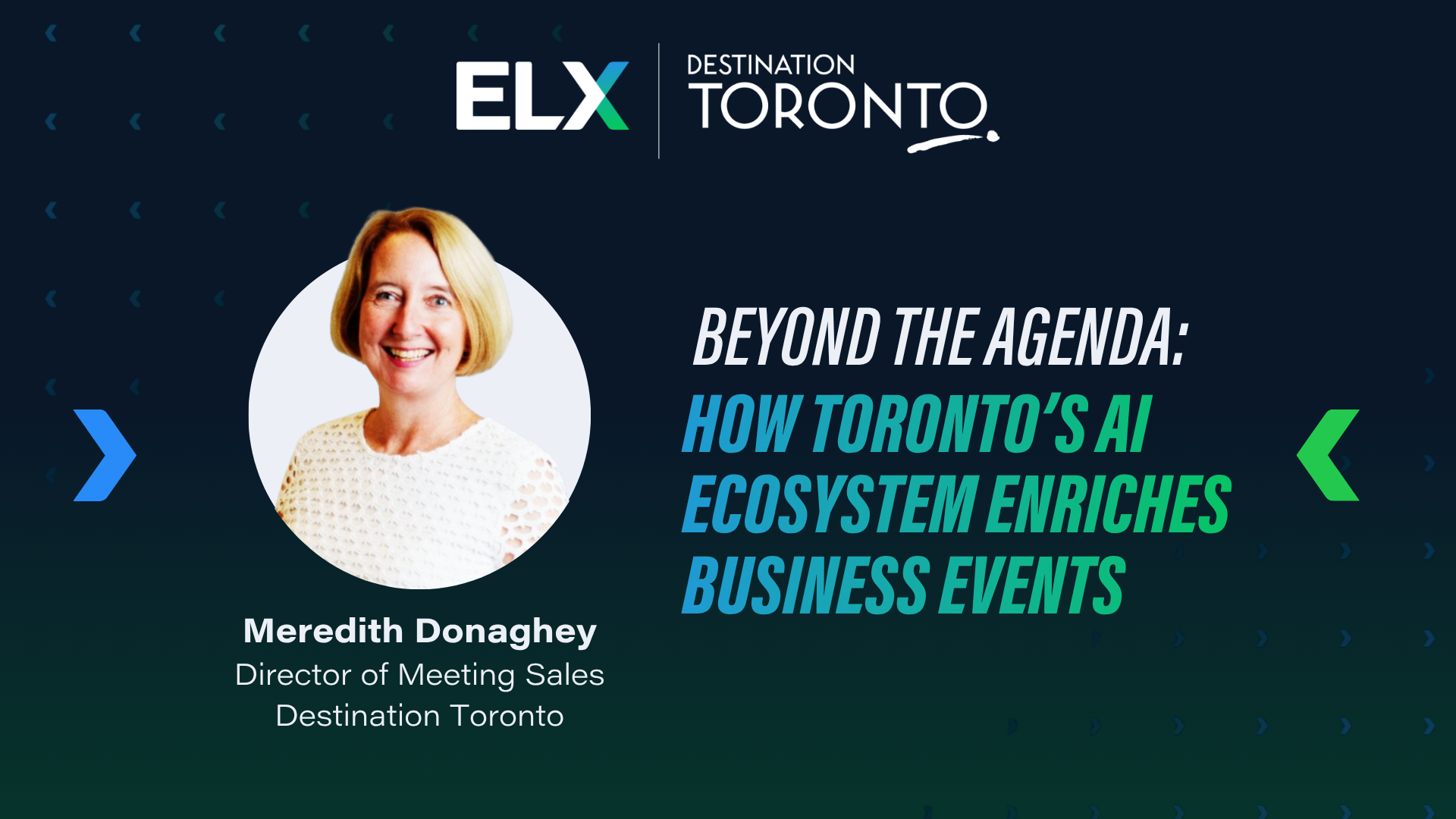
AI is becoming a growing part of the event agenda, but the opportunity extends into the destination itself. For event leaders, access to local researchers, entrepreneurs and industry experts can help connect the conversation on stage with the work happening beyond the venue.
In this ELX editorial, we speak with Meredith Donaghey, Director of Meeting Sales at Destination Toronto, about how organizations can engage with the city’s AI ecosystem. We explore what those connections could mean for speakers, programming and experiences, and how local expertise can bring greater depth and relevance to business events across sectors.
Toronto has played an important role in the development of modern AI and has grown into a major global technology hub. What makes Toronto’s AI and innovation ecosystem distinctive today?
Meredith: What stands out to me about Toronto, is how closely the research and the real-world work are connected. Geoffrey Hinton helped lay the foundations of modern AI here, and he went on to co-found the Vector Institute. Today, Vector brings researchers and businesses together to put that work into practice.
You can see that connection across the city. The University of Toronto, Vector, MaRS and some of our leading hospitals are all located in close proximity to one another. It creates opportunities for people working on very different challenges to meet and collaborate. That’s what makes Toronto exciting to me - the ideas being developed have a path into healthcare, business and everyday life.
AI is transforming industries well beyond the technology sector. How can organizations meeting in Toronto tap into the city’s AI ecosystem to enhance their conference or event?
Meredith: AI is already changing the way many industries work, and our city has researchers and practitioners who can speak to those changes from direct experience. When an organization meets in Toronto, there’s an opportunity to draw on that expertise and showcase that innovation firsthand.
Our team can help identify relevant local connections and think through how they might contribute to the program. For a pharmaceutical meeting, that might mean bringing clinicians and AI researchers together with attendees to discuss a shared challenge in patient care. It gives people a chance to hear what’s happening in Toronto, test ideas against their own experience and leave with connections that extend beyond the meeting.
What opportunities are there to connect visiting organizations with Toronto’s researchers, entrepreneurs, technology leaders and other subject-matter experts?
Meredith: There are many ways to make the city’s expertise part of an event. The right approach depends on what the organization wants people to learn and who they hope to meet. We work with local scientists, researchers and academics who are connected to the city’s wider knowledge network. Those relationships can help visiting organizations bring a fresh perspective into their event and create opportunities for collaboration afterward.
What could that look like in practice? How might Toronto’s innovation ecosystem contribute to speakers, programming, site visits or other experiences around an Event?
Meredith: It starts with the purpose of the event and what the organization wants attendees to take away. A group exploring AI’s impact on its industry might bring a Toronto researcher and a local business leader together for a conversation about where the research is heading and how it is being applied. A more hands-on approach could see delegates working through a challenge with local AI specialists and entrepreneurs, or a visit to MaRS to meet founders and researchers whose work relates to their field.
Toronto also has significant strengths in areas such as life sciences, financial services and technology. How does the intersection of AI with these sectors create opportunities for organizations meeting here?
Meredith: Toronto is a known leader in fields such as life sciences, technology and financial services, as well as AI. Having that expertise and leadership sitting alongside these industries makes it a natural place to put it to work.
In life sciences, that might mean connecting delegates with clinicians and researchers exploring how AI can improve patient care. A financial services company could hear how local banks and researchers are approaching questions such as fraud detection and risk. Toronto’s technology community brings another perspective, with entrepreneurs and companies working to turn research into products people can use.
What role can Destination Toronto play in making the right local connections?
Meredith: Our role is to connect the organizer with the right people in Toronto. We start by understanding what they want attendees to learn or experience, then look for local experts whose work speaks to that goal.
We can also help think through how those people become part of the event. We know the city and its communities, and we can bring the right partners into the conversation early. That helps create an experience that is invaluable for attendees.
---
A destination’s value includes the people and ideas an event can bring within reach. Toronto’s AI ecosystem offers a starting point for event leaders to consider how local expertise could support their audiences and objectives.
The opportunity begins with identifying the connections that would make a meaningful contribution to the program. Whether through a researcher’s perspective, an industry discussion or a site visit, those choices can give attendees a closer understanding of how AI relates to their own work.